What does procurement actually include?
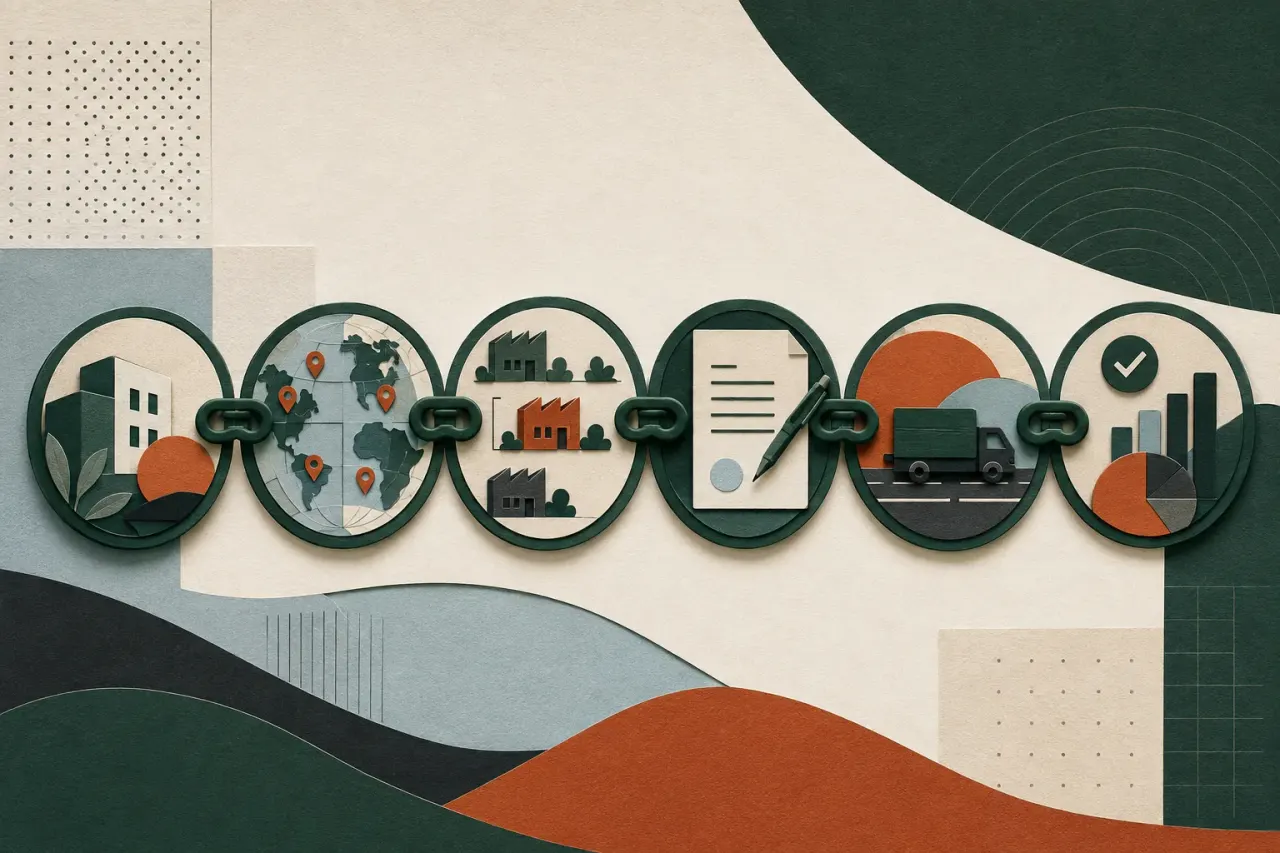
Procurement connects an internal need to an external supplier market. The scope normally includes demand clarification, spend and market analysis, sourcing, supplier evaluation, negotiation, contracting, buying controls, supplier performance, risk, and renewal or exit.
The exact boundary varies. One company may place purchasing operations, accounts payable, and contract management inside procurement; another may distribute them across finance, legal, and operations. The durable test is decision ownership: who can shape the requirement, choose the route to market, commit the organization, and intervene when the supplier outcome falls short?
What are the main stages of procurement?
- Define the need.Clarify the outcome, users, constraints, demand, budget, timing, and what would count as success.
- Understand the market.Study supplier capability, competition, cost drivers, commercial norms, risk, and available alternatives.
- Choose a commercial route.Decide whether to compete, negotiate, renew, aggregate, use an existing agreement, or reconsider the need.
- Select and contract.Evaluate suppliers against disclosed criteria, negotiate the whole deal, approve the decision, and create a usable agreement.
- Buy and control.Translate the agreement into catalogs, purchase orders, approvals, receipts, and invoices.
- Manage the outcome.Track delivery, cost, quality, risk, relationships, changes, and whether the expected value is actually realized.
How is procurement different from supply chain?
Procurement manages the organization’s commercial relationship with external suppliers. Supply chain is wider: it can include planning, manufacturing, inventory, logistics, warehousing, and delivery to the customer. The functions overlap wherever supplier choices affect continuity, inventory, lead time, quality, or resilience.
What should procurement optimize?
Price is visible, but it is rarely the whole outcome. Procurement balances total cost, quality, service, speed, risk, resilience, innovation, compliance, competition, and—increasingly—environmental and social considerations. ISO 20400 provides guidance for integrating sustainability into procurement decisions; it does not replace the commercial and operational judgment required for a specific purchase.
Procurement is good when the organization gets the right outcome from the right market on workable terms—and can explain, operate, and improve the decision afterward.
Who works in procurement?
Analysts build the evidence base. Buyers and specialists execute sourcing and purchasing work. Category managers shape strategies for related spend. Procurement managers and directors design the operating model and lead teams. A Chief Procurement Officer connects supplier decisions to enterprise strategy, risk, and performance.
Sources and editorial note
This guide is an editorial explanation, not a quotation or substitute for an organization’s policy. It was reviewed against the following primary, institutional, and clearly attributed company sources.
- 01Federal Acquisition Regulation, Part 10 — Market ResearchAcquisition.gov · Primary or institutional source · Retrieved September 3, 2026
- 02Understand the federal procurement processPublic Services and Procurement Canada · Primary or institutional source · Retrieved September 3, 2026
- 03ISO 20400:2017 — Sustainable procurement guidanceInternational Organization for Standardization · Primary or institutional source · Retrieved September 3, 2026